

Laos Solidifies Regional Ties as SCO Dialogue Partner
Laos formalizes cooperation with the Shanghai Cooperation Organization

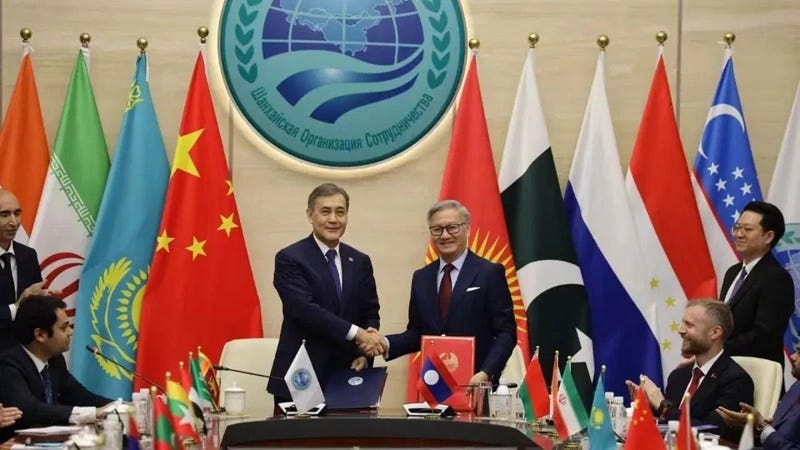
In a significant development for regional diplomacy, Laos has officially confirmed its status as a Dialogue Partner of the Shanghai Cooperation Organization (SCO).
This milestone was marked by the signing of an agreement between Lao Deputy Prime Minister and Minister of Foreign Affairs Thongsavanh Phomvihane and SCO Secretary-General Nurlan Yermekbayev on July 10 in Beijing, China. The formalization of this partnership reflects Laos’ commitment to deepening its regional engagement and leveraging multilateral cooperation for economic and infrastructural growth.
A Strategic Step in Regional Integration
Although Dialogue Partners are not full members of the SCO, their participation is vital for fostering regional stability and economic collaboration. They are allowed to attend select meetings and participate in sector-specific initiatives, which can significantly benefit their national development agendas. The agreement signed by Laos is a direct result of the decision made at the SCO summit in Tianjin, China, on September 1, 2025, when Laos was admitted as a Dialogue Partner. This move symbolizes Laos’ desire to actively participate in regional affairs beyond traditional bilateral relationships.
Thongsavanh Phomvihane emphasized that the new status would empower Laos to expand cooperation in various sectors, including trade, investment, transport, tourism, digital transformation, and sustainable development. He described the agreement as a milestone, reinforcing Laos’ strategic aim of becoming a more integrated player in regional initiatives. The Lao government views this partnership as a vital platform to exchange expertise, promote economic growth, and foster mutual understanding with SCO member states.
Driving Regional Connectivity and Development
A core focus of Laos’ SCO partnership is enhancing regional connectivity. As a landlocked country, Laos aims to transform into a land-linked nation by strengthening its transport and logistics infrastructure. The partnership with SCO is expected to bolster Laos’ long-term goal of becoming a regional transport hub. Both sides acknowledged the importance of Laos as a crucial link within China’s Belt and Road Initiative (BRI) and the Regional Comprehensive Economic Partnership (RCEP).
The China-Laos Railway, which has become a significant gateway for regional trade, exemplifies Laos’ strategic position. Officials noted that the new partnership could open doors for deeper cooperation with Central Asian, South Asian, and Eurasian countries. Such collaborations could lead to increased trade, investment, and logistics capacity, ultimately supporting Laos’ ambition to become a regional logistics hub and a key connector in China’s broader economic outreach.
Looking Ahead
Founded in 2001, the SCO now comprises 10 member states, two observer states, and 15 Dialogue Partners, including Laos. As Laos advances its relations with the organization, it aims to capitalize on opportunities for economic diversification and regional integration. The agreement signifies a step forward in Laos’ strategic diplomacy, reinforcing its role as a bridge between China, Southeast Asia, and beyond.
Through this partnership, Laos is positioning itself as a vital link in regional development and cooperation, leveraging multilateral mechanisms to achieve sustainable growth and connectivity. As the country continues to pursue digital transformation and economic diversification, its ties with the SCO are poised to play a pivotal role in its development trajectory.