

Global Geopolitics & Technology Monitor
Navigating Geopolitical Tensions, Energy Transitions, and Digital Competition

Red Sea Security
US and Greece Seek Renewal of Monitoring Resolution

The United Nations Security Council is set to vote on a draft resolution on 14 July to extend the existing reporting requirement concerning attacks by the Houthi rebel group in Yemen on merchant vessels in the Red Sea.
This resolution, initially established in January 2024 by resolution 2722, aims to maintain international oversight amid ongoing regional tensions. The draft, authored by Greece and the US, co-penholders on the Red Sea crisis proposes a six-month renewal, continuing the reporting obligation until January 2027. This move underscores the persistent concerns over security risks in the region despite recent reductions in reported Houthi attacks.
Background and Negotiations
The renewal process has been largely smooth, with previous extensions approved without contention. The draft was circulated on 6 July, with no objections raised during a silence procedure that concluded on 10 July. The resolution’s simplicity reflects a consensus on the importance of continued monitoring, with the main purpose being to keep the Security Council informed on attacks by Houthis. Notably, Russia expressed skepticism during the discussions, questioning the relevance of renewal, citing the absence of recent attacks. Despite this, the draft was adopted in blue, signaling broad support from Council members.
Regional Security Dynamics and Challenges
While recent reports from the Secretary-General highlight attacks on vessels in 2025, including incidents involving ships flagged by Liberia and the Netherlands, there are indications of increased security risks in the broader Red Sea region. The International Maritime Organization (IMO) has reported a rise in piracy and armed robbery attempts, with 24 incidents over the previous three months. Additionally, a recent attack by unknown armed assailants near Hodeidah demonstrated the persistent threat to maritime navigation, even if no group claimed responsibility. These incidents reaffirm that the security situation remains volatile, justifying the continuation of monitoring measures.
Divergent Views and Regional Tensions
Russia and China have voiced reservations about the reporting requirement, abstaining from resolutions related to the Red Sea. Russia, in particular, has questioned the legal basis for certain language used in previous resolutions, emphasizing its reluctance to support measures it perceives as lacking clear international law backing. Meanwhile, regional tensions continue to influence the broader security environment. The outbreak of hostilities between Iran and the US, along with threats from Iran to leverage Houthi capabilities, have kept the region on edge. The Houthis have previously halted attacks following a US-brokered ceasefire but have recently resumed threats amidst escalating regional conflicts.
Regional Escalations and Potential Flashpoints
The situation within Yemen remains tense, with recent developments raising fears of further escalation. In June, Iran’s IRGC warned of a coordinated response that could extend from the Strait of Hormuz to the Bab al-Mandab Strait, a critical chokepoint for global shipping. Iran’s alleged delivery of materials to the Houthis and the landing of an Iranian plane in Sana’a have heightened concerns about external interference. Meanwhile, Yemen’s internationally recognized government accused Iran of smuggling prohibited materials and threatened retaliation. The Security Council has scheduled an urgent briefing on these developments, reflecting the escalating regional instability and the importance of continued monitoring.
The Need for Continued Oversight
Despite the absence of recent attacks, the security environment in the Red Sea remains fragile. The recurring threats from Houthis, combined with Iran’s regional ambitions, suggest that conditions prompting the original resolution persist. Many Security Council members believe that maintaining the reporting mechanism continues to serve a vital function in monitoring and responding to ongoing threats, ensuring that the international community remains informed and prepared for developments in this strategically vital region.
Yemen Crisis Escalates Amid Regional Tensions
Security Council to Address Rising Tensions in Yemen

On 13 July, the UN Security Council is scheduled to hold an open briefing on Yemen, focusing on the ongoing conflict and recent regional developments.
The meeting, requested by the Yemeni government, aims to address violations of UN resolutions by the Houthi rebel group, allegedly supported by Iran. Key officials, including Mohamed Khaled Khiari and Indrika Ratwatte, are expected to brief the Council. This session comes amid intensifying clashes and diplomatic challenges in Yemen, a country embroiled in a civil war since 2014, with a fragile ceasefire established in 2022.
Incidents Fueling Concerns Over Iranian Support and Sovereignty
Recent events have heightened tensions, notably a 3 July incident involving an Iranian civilian aircraft landing in Sana’a. The Houthis claimed the plane was transporting patients and stranded Yemenis, but reports suggest it also carried a delegation to Iran’s funeral of Supreme Leader Ayatollah Khamenei. This marked the first confirmed Iranian aircraft landing in Sana’a in nearly a decade, raising alarms over Iran’s involvement. The Yemeni government condemned the flight, alleging it violated Yemen’s sovereignty and could have transported prohibited materials under UN sanctions. They called for an international investigation, emphasizing that such actions undermine peace efforts and threaten regional stability.
Houthi Threats and Regional Military Posturing
The Houthis responded with threats of a “comprehensive response” targeting Saudi Arabia if their airspace is violated again. The Coalition led by Saudi Arabia dismissed these threats, warning of a forceful response to any aggression. Tensions further escalated after the Houthis claimed to use air defenses against Saudi fighter planes attempting to prevent the Sana’a landing. The conflict’s regional dimension is evident, with Iran’s support for the Houthis and the potential for broader escalation involving the US, Israel, and regional countries. These developments risk destabilizing the fragile ceasefire and complicate peace prospects.
Calls for De-escalation and Political Resolutions
The Security Council is expected to reaffirm support for Yemen’s sovereignty and territorial integrity, urging all parties to respect UN resolutions, especially resolution 2216, which imposes an arms embargo on the Houthis. Members are likely to emphasize the importance of dialogue and diplomatic solutions, urging the parties to de-escalate tensions. The meeting may also highlight ongoing efforts by UN Special Envoy Hans Grundberg and support confidence-building measures like detainee releases, which have shown promise in advancing negotiations.
Humanitarian Concerns and Regional Stability
Humanitarian issues remain at the forefront, with many Council members condemning the detention of UN and humanitarian personnel by the Houthis, which hampers aid delivery. The recent surge in violence, including clashes in Hodeidah, has worsened the humanitarian crisis. Additionally, regional escalation particularly Iran’s confrontations with the US and threats against maritime navigation poses risks to Yemen’s stability. Many members call for efforts to shield Yemen from regional conflicts, stressing that further escalation would devastate the Yemeni population and undermine peace prospects.
South Sudan at 15
The Cyclical Nature of Conflict and Profit in South Sudan

Fifteen years after gaining independence from Sudan in 2011, South Sudan remains embroiled in conflict and political instability.
While independence marked the end of a long civil war, it did not resolve underlying issues of power, revenue, and control. Instead, the country descended into renewed violence in 2013, with fragile peace efforts, including the 2018 Revitalised Agreement, repeatedly falling short of delivering lasting stability.
The Illusion of Failed Peacemaking
Often, South Sudan’s peace process is portrayed as a failure lacking political will or riddled with spoilers. However, a different perspective suggests that these agreements are not failing but functioning to stabilize a system that makes violence profitable. Peace settlements tend to preserve and even formalize wartime economic and coercive systems, transforming conflict machinery into tools of control that benefit elites rather than civilians.
Predatory Peace: A System of Extraction
Research shows that peace in South Sudan has redistributed who profits from the country’s revenue system but has not dismantled the underlying structures of extraction. These systems encompassing taxes, oil revenues, checkpoints, and non-monetary resources like cattle and labor continue to operate as an “income complex.” Soldiers and officials enforce these systems, which serve to reward elites and maintain coercive power, often under the guise of peace. This pattern, dubbed “predatory peace,” makes the state itself a prize worth fighting for, as control over revenue remains highly lucrative.
Historical Roots of Revenue Control
The pattern of resource exploitation predates independence, dating back to colonial times. Over more than a century, successive governments, rebel groups, and colonial authorities have relied on revenue extraction to consolidate control rather than promote public welfare. Peace agreements since the 1970s have simply reshuffled who benefits from these systems, rather than dismantling them, leading to confusion and overlapping authority further entrenching elite dominance.
The Reality for Ordinary People
Despite elite-controlled revenue systems, many South Sudanese recognize the importance of contributing to public goods like roads and clinics. They differentiate between community contributions, which are visible and reciprocal, and state taxes, which they see as unjust extraction. Yet, peace agreements often sever this connection, formalizing elite bargains that benefit the few at the expense of the many.
Toward Non-Predatory Peace
A genuine, non-predatory peace would require reforms focused on transparency and accountability. This includes building a civilian-controlled revenue system, linking taxes to public services, and conditioning external aid on genuine revenue reforms. Monitoring cross-border flows of resources like oil, arms, timber, and looted goods must be prioritized, empowering citizens and civic actors to hold elites accountable. Only through such measures can South Sudan hope for a peace that serves its people, not just the interests of its political and economic elites.
Rethinking Peace in South Sudan
Fifteen years on, South Sudan’s experience reveals that peace is often manipulated to sustain extractive systems that benefit elites. True peace requires addressing the core economic and political structures that perpetuate conflict transforming peace from organized robbery into a pathway for equitable development and stability.
Zhu Hexin: New landscape of global capital flows and China’s highlevel opening-up
Keynote speech by Mr Zhu Hexin, Deputy Governor of the People’s Bank of China and SAFE Administrator, at the 2026 Lujiazui Forum, Shanghai, 17 June 2026.
Distinguished Vice Premier He Lifeng,
Party Secretary Chen Jining
former PBOC Governor Zhou Xiaochuan
Mayor Gong Zheng, and dear guests,
Good morning!
It is a great pleasure to attend the Lujiazui Forum. The speech just delivered by Vice Premier He Lifeng provides important guidance for us in implementing the arrangements of the “15th Five-Year Plan” and in solidly advancing efforts to prevent risks, strengthen regulation, and promote high-quality development. We will earnestly study the guidelines and fully implement it.
The “15th Five-Year Plan” proposes “enhancing capital account openness.” Capital account opening is an important component of the country’s high-standard opening-up. I would like to take this opportunity to share three observations regarding the new landscape of global capital flows and China’s capital account openness.
I. Global capital flows have shown resilience amid volatility and divergence
From a long-term perspective, as the international economic and financial landscape shifts, the pattern of global capital flows has continued to evolve.
Since the 1980s, economic globalization and financial integration have deepened. The breadth and depth of cross-border capital flows have continued to expand. Despite multiple rounds of crises and adjustments during this period, openness and integration have remained the underlying theme of global capital flows. Since the beginning of 2020, the world has entered a period of turbulence and transformation, with increasing instability and uncertainty. In the face of a more complex economic and financial environment, more extensive geopolitical and economic-trade adjustments, and more profound industrial and technological changes, global capital flows have displayed new characteristics of “volatility, divergence, and resilience.”
The first characteristic is greater volatility in capital flows.
The pandemic shocks, geopolitical conflicts, and economic-trade frictions have intertwined and compounded one another. Global inflation and interest rates have shifted from the prolonged low levels to elevated levels with ongoing adjustments.
Global financial conditions are changing rapidly, leading to greater volatility in international financial markets and more pronounced pro-cyclical fluctuations in capital flows. Changes in the financial structure have further amplified this volatility. Crossborder capital is increasingly being allocated through channels such as bonds, equities, and funds. Compared with traditional channels like direct investment and bank lending, shifts in risk appetite and expectations now transmit more quickly across markets and economies.
The second key characteristic is the deepening divergence in the structure of capital flows.
As a new wave of technological revolution and industrial transformation gains momentum, global capital is increasingly concentrating in future-oriented industries such as artificial intelligence (AI), semiconductors, biomanufacturing, and the energy transition. Meanwhile, some traditional industries, low-growth sectors, and highly-valued assets are facing mounting repricing pressures. Divergence across countries, industries, and assets has become more pronounced. Looking ahead, the accelerating translation of new technologies into productivity gains, business model innovation, and industrial applications, coupled with the long-term impact of innovation achievements on economic growth and income distribution, will profoundly shape the future direction of global capital allocation.
The third key characteristic is the notable resilience of capital flows.
Despite multiple challenges, the foundations of global openness and cooperation remain solid, while the underlying incentives for cross-border resource allocation by all types of entities continue to be strong. Global foreign direct investment (FDI) reached USD1.6 trillion in 2025, recovering to its 2019 level. Cross-border securities investment also remained buoyant. In 2025, net cross-border securities inflows received by countries worldwide exceeded USD4 trillion, up 14 percent from the previous year and the highest level on record. The resilience of the global financial system has also continued to improve. Many emerging market economies, including China, have accumulated greater experience in macroeconomic regulation and macroprudential management, enhancing their capacity to withstand external shocks.
II. China Brings Greater Certainty to Global Development
China has consistently emphasized that the certainty of its own development is the best response to external uncertainties. We remain committed to comprehensive openness and cooperation. Through two-way cross-border capital flows, China efficiently connects its innovation ecosystem, industrial capabilities, and financial services with the global economy, enabling countries around the world to share in the benefits of development.
On the one hand, global innovation capital is being deployed into China with growing momentum, shifting from sharing the cost and scale advantages of “Made in
China” to jointly building the technology and industrial ecosystem of “Created in China”. In 2025, China’s actual utilized foreign capital exceeded USD100 billion, with the hightech industry accounting for about one-third. The growth rates of utilized foreign capital in the medical device and aerospace industries reached 42 percent and 23 percent, respectively. In the capital market, the “technology narrative” is also becoming increasingly clear. By the end of the first quarter of 2026, foreign investors held domestic stocks worth approximately USD600 billion, of which about USD90 billion was in the information technology sector.
On the other hand, China is providing more patient capital to the world. Among the outward investments of domestic enterprises and institutions, direct investment, characterized by long investment horizons and strong operational attributes, accounts for a relatively high proportion, reaching 45 percent in 2025. China’s outward investment stock has ranked among the global top three for nine consecutive years, spanning over 190 countries and regions, effectively driving the industrial development of host countries and supporting the resilience of global industrial and supply chains.
In the two-way interaction between China and global capital flows, the RMB’s role as a financial link continues to expand. Cross-border RMB usage and capital account openness promote each other. The share of cross-border RMB receipts and payments under China’s capital account has risen to about 60 percent. Relying on its good reputation, stable value, low financing costs, and increasingly refined payment and clearing network, RMB provides global entities with diverse currency options and risk diversification tools, and also creates more stable and predictable financial conditions for cross-border capital flows.
III. Deepening the high-standard institutional opening-up of capital account
In recent years, China’s capital account opening-up policies have been continuously improved, effectively supporting the two-way growth and structural optimization of cross-border capital flows. By the end of 2025, domestic entities held USD8 trillion in external assets, the stock of foreign direct investment reached USD4 trillion, and foreign investors held over USD1 trillion in domestic stocks and bonds.
Currently, the connotation and denotation of China’s capital account opening up are further expanding. This is mainly reflected in taking institutional opening-up as the direction, driven by the real business and asset allocation needs of various entities, using cross-border RMB usage as an important vehicle, and supported by full-chain management services for cross-border capital flows.
Looking ahead, to promote opening-up at a higher level and with higher quality, we will adhere to market-oriented, law-based, and internationalized principles, focusing on the following “four deepenings” to continuously enhance the level of capital account opening-up.
First, deepening from channel-based opening-up to institutional opening-up.
Capital account opening-up is, in essence, the opening-up of the rules and systems governing cross-border capital flows. Next, we will better align with high-standard international economic and trade rules, enhance the transparency and predictability of the opening-up arrangements, and maintain cross-cycle continuity and stability of policy.
The financial market is a key area of institutional opening-up. We will further improve the openness of securities issuance market, promote the alignment of securities trading market rules with international standards, advance the integration of channels, optimize institutional arrangements, and unify rules to enhance the two-way opening-up of the financial market.
Second, deepening the shift from facilitating specific business operations to facilitating market entities.
The focus of capital account opening-up in serving the real economy lies in better meeting the increasingly diversified cross-border capital allocation needs of business entities. In recent years, we have deepened reforms to facilitate cross-border investment and financing, significantly reduced administrative approvals, and improved business processing efficiency. Next, we will further shift from “facilitating individual business operations” to “facilitating market entities”, and from “ex-ante approval” to “inprocess monitoring and ex-post verification”. Entities with sound operations and good credit will be granted greater facilitation.
Policies such as the reform of foreign exchange business operations in banks and the multinational corporation cash pooling scheme are vivid examples of this approach. To date, the reform has covered all major banks handling cross-border transactions, facilitating over USD1.3 trillion worth of business for our corporate clients. Meanwhile, the cash pooling policy has benefited more than 1,100 multinational corporations and 20,000 member enterprises, streamlining cross-border receipts and payments in excess of USD2.4 trillion.
Third, we are moving from foreign exchange management toward greater synergy between onshore and offshore currencies.
The internationalization of the RMB has added new dimensions to capital account convertibility. We must therefore ensure better coordination between RMB and foreign currency businesses, as well as between onshore and offshore markets.
In recent years, we have made notable progress in aligning cross-border policies for both domestic and foreign currencies. The bank account settlement system now supports integrated operations in RMB and foreign currencies. Most cross-border investment and financing activities are governed by a single set of rules or a unified document framework, and can be handled through a “one-stop” service at the SAFE orat commercial banks. Going forward, we will strengthen policy coherence between foreign exchange administration and RMB cross-border regulations, support the development of the offshore RMB market, enrich RMB-denominated investment and hedging products, and provide a stable institutional foundation for the further internationalization of our currency.
Fourth, we are expanding our management and services from currency conversion to the entire chain of cross-border capital flows.
Cross-border capital flows involve multiple links, including currency conversion, underlying transactions, payment, settlement, risk hedging, and exit arrangements. In the next phase, it is imperative that we broaden the perspective of capital account opening from the conversion stage to the entire chain of cross-border capital flows. By introducing more systematic opening-up policies, strengthening our risk prevention framework, and improving overall governance, we aim to advance openness and cooperation on the premise of safeguarding bottom-line security.
The foreign exchange market plays a critical role in risk hedging and liquidity management. In recent years, trading volume in China’s foreign exchange market has repeatedly hit record highs. Looking ahead, we will encourage greater foreign participation, support innovation in RMB foreign exchange derivatives, improve services for corporate exchange rate risk management, and enhance both the vitality and resilience of the market.
In sum, capital account convertibility is a systemic undertaking that involves multiple objectives, interdependent links, and various constraints. It requires coordinated efforts from all parties, pooled wisdom, and a balanced approach to development and security, with systematic planning and phased implementation.
In the near term, we will act on Vice Premier He’s directives and take more concrete steps to facilitate cross-border investment and financing. First, building on the nine facilitation measures introduced last year, we will roll out a new package of incremental policies to create synergies between existing and new instruments. Second, we will comprehensively reform the policy framework for cross-border FDI to better serve global enterprises seeking to invest and operate in China. Third, we will provide stronger support for domestic entities in their global resource allocation. Following this year’s optimization of rules for overseas listings and lending by domestic firms, we will proactively address market demands by further simplifying the administrative requirements for outward direct investment (ODI) and external debt, refining policies on foreign currency loans and cross-border equity incentives, and granting investment quotas to a new batch of qualified domestic institutional investors
Shanghai serves as both a forerunner and a testing ground for high-level financial opening-up. This year, the pilot program for high-level trade opening-up in Shanghai has already accounted for one quarter of the city’s current account foreign exchange receipts and payments. The corporate foreign exchange hedging ratio in Shanghai has risen to 38 percent. Policy dividends continue to be unleashed in areas like easier external debt access for tech-innovative firms, green bond frameworks, and cross-border financial service platforms. The reform of foreign exchange business operations in banks has cumulatively facilitated over USD200 billion worth of transactions for enterprises in Shanghai. In the next stage, we will follow Vice Premier He’s guidance by supporting Shanghai in piloting more flexible foreign exchange settlement in trade, implementing pilot schemes to facilitate overseas investment using cross-border reinsurance income, and expanding the application of centralized cash pooling and management for multinationals. These efforts are designed to enhance the effectiveness of institutional innovation and provide stronger support for developing Shanghai as an international financial center.
Ladies and gentlemen, dear friends,
In a world full of uncertainties, openness and cooperation remain the most important anchor of certainty. We will stay committed to high-level opening-up and build a foreign exchange system that is more convenient, more open, safer, and smarter-to better serve China’s high-quality development and to help sustain the steady growth of an open world economy.
To conclude, I wish this forum a great success. Thank you!

Chinese Chipmakers Bet on SiC to Power AI-Driven Data Centres
Silicon Carbide’s Role in Next-Gen Energy Efficiency

As artificial intelligence (AI) continues its rapid expansion, data centres worldwide are facing unprecedented energy demands. The surge in AI applications requires massive computational power, which in turn strains existing energy grids.
To address this challenge, chipmakers are turning to advanced semiconductor materials, particularly silicon carbide (SiC), known for its superior heat resistance and energy efficiency. These attributes make SiC an ideal choice for upgrading power sources within data centres, ensuring they can handle increased workloads while reducing energy consumption.
Basic Semiconductor: A New Player in the SiC Market
Shenzhen-based Basic Semiconductor has recently gained attention as a major contender in the SiC chip industry. Founded in 2016 by alumni of Tsinghua University and the University of Cambridge, the firm is one of China’s few fully integrated device manufacturers specializing in SiC technology. From chip design to wafer fabrication and module packaging, Basic Semiconductor covers the entire production chain. The company’s recent passing of a listing hearing in Hong Kong signals its upcoming IPO, aiming to fund expansion amid rising global demand for next-generation power semiconductors.
China’s Push to Dominate SiC Technology
Basic Semiconductor’s IPO ambitions are part of China’s broader strategic initiative to dominate the next wave of SiC technology. The country is investing heavily to develop a competitive edge in this high-efficiency semiconductor market, competing with established players like Silan Microelectronics and China Resources Microelectronics. As electric vehicles (EVs) and AI infrastructure grow, SiC chips are increasingly vital. Originally prized in EVs for their durability and efficiency, SiC components are now being integrated into data centre power supplies to improve energy management amid soaring digital demands.
Market Opportunities and Challenges
The global SiC market is currently experiencing oversupply, largely due to aggressive capacity expansion by Chinese firms. However, analysts from UBS suggest that upcoming transitions to 800V architectures in 2027 and 2028 will help absorb excess inventory. Major industry players like Nvidia are already integrating SiC and gallium nitride (GaN) chips into their advanced power systems, forecasting a market share of 10-15% for these materials by then. As data centres adopt higher voltage architectures, demand for SiC is expected to rise, positioning Chinese chipmakers like Basic Semiconductor to play a key role in this energy-efficient future.
Xi Jinping Advocates for Openness in AI Amid Geopolitical Tensions
China Emphasizes AI as a Strategic Priority and Opposes ‘One Country’ Control in Technology Development
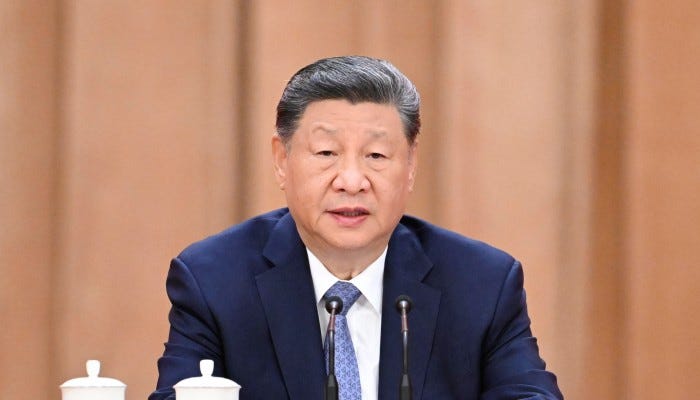
At the 2026 World Artificial Intelligence Conference (WAIC), China’s largest annual AI event, President Xi Jinping’s presence underscored the nation’s commitment to advancing artificial intelligence as a key driver of future growth.
Xi’s speech emphasized the importance of “openness” in AI innovation, advocating for international cooperation and knowledge sharing. His remarks aim to position China as a collaborative player in the global AI landscape, countering narratives of technological isolation. This stance reflects China’s desire to foster an environment conducive to innovation while balancing national interests.
Strategic Significance of AI in China’s Geopolitical Agenda
Xi Jinping’s attendance and speech elevated the significance of AI within China’s broader geopolitical strategy. With technological independence becoming a national priority, China aims to reduce reliance on Western technology amid escalating tensions. The country views AI as a vital component of its economic and military modernization plans. Xi’s emphasis on “openness” suggests a nuanced approach while advocating for international cooperation, China also seeks to assert control over its AI development and ensure that it remains at the forefront of global innovation.
Tensions with Washington Over Technology Restrictions
The backdrop to China’s push for AI self-reliance is the ongoing conflict with the United States. Washington’s strict export controls on advanced semiconductors and restrictions on access to cutting-edge AI models have hampered China’s progress. In response, Beijing has accelerated efforts to develop homegrown AI capabilities, aiming to become less dependent on foreign technology. This includes investing heavily in domestic research, fostering innovation hubs, and supporting local tech firms. Xi Jinping’s call for openness, therefore, signifies a strategic balancing act pursuing international collaboration while safeguarding China’s technological sovereignty.
In summary, President Xi Jinping’s leadership at WAIC signals China’s dedication to advancing AI as a core element of its national strategy. Amid external restrictions, China’s push for technological independence and openness marks a pivotal chapter in the evolving global AI competition.
China’s WAIC 2024
Xi Jinping’s presence signals strategic importance of AI leadership
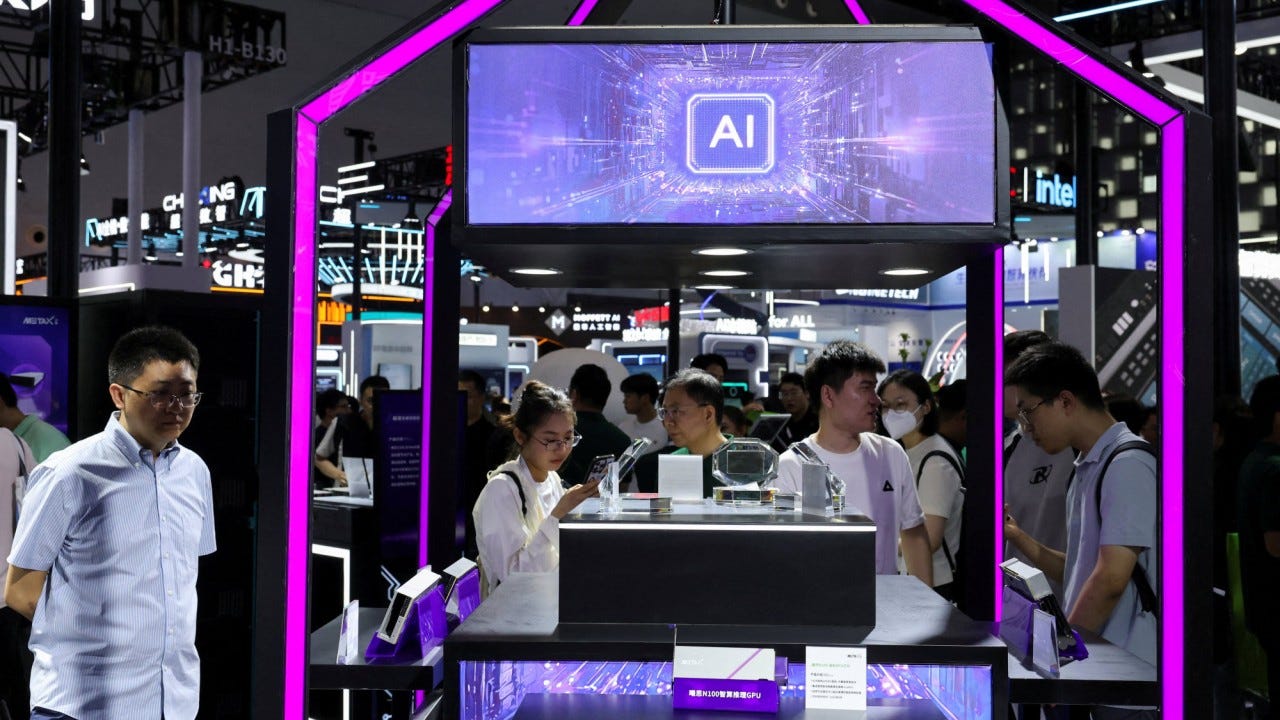
China’s largest annual AI event, the World AI Conference (WAIC) in Shanghai, is set to highlight the country’s ambitions to lead in artificial intelligence across multiple domains.
With President Xi Jinping attending and delivering a keynote speech, the event underscores China’s strategic push to develop a comprehensive AI ecosystem amid ongoing US-China technology rivalry. As restrictions limit China’s access to advanced US chips, Beijing is emphasizing self-reliance and innovation across hardware, software, and applications, aiming to shape global AI standards and expand its influence in the digital domain.
Beyond Chatbots: Expanding AI into the Physical World
WAIC 2024 will showcase AI’s evolution from virtual assistants to physical agents capable of performing real-world tasks. Developers will unveil 261 large models, including Alibaba’s Qwen, SenseTime’s SenseNova-U1 Pro, Tencent’s Hy3, and Moonshot’s Kimi K2.7, emphasizing multimodal capabilities, coding, and autonomous agents. Consumer devices are also integrating these advances; ZTE’s Nubia and Honor are teasing agent phones that can operate across various applications. Humanoid robots will be a highlight, with over 300 showcased, ranging from robotic hands to transformer-like mechs by Unitree. These demonstrations aim to illustrate how cutting-edge models are turning perception, planning, and control into functional, physical robots.
AI Infrastructure: Chips to Complete Systems
China’s response to US export restrictions is evident in its focus on developing indigenous AI hardware. Over 200 companies will display a variety of chips, from GPUs and 3D-stacked processors to experimental brain-inspired accelerators. The hardware segment also emphasizes building full AI systems servers, networking gear, cooling, and interconnects highlighting China’s goal of creating a self-sufficient AI infrastructure stack. Huawei’s Atlas 950 supernode and other domestic systems will be on show, testing whether China can assemble a compatible, robust AI hardware ecosystem amid ongoing export controls on US-made processors.
Shaping Global AI Governance
Beyond technological innovation, WAIC serves as a diplomatic platform for China to influence global AI rules. President Xi’s keynote elevates the event’s strategic importance, signaling China’s intent to shape international standards and governance frameworks. Beijing is pushing forward with plans for a World Artificial Intelligence Cooperation Organization, aimed at fostering collaboration, especially with developing countries. The newly launched WAIC Academic conference, led by renowned scientist Andrew Yao, seeks to position China as a leader in AI research. Meanwhile, discussions on technical standards agent permissions, reliability, safety are gaining prominence, reflecting China’s desire to set global norms in AI development and deployment.
Conclusion
As WAIC 2024 unfolds, it will reveal China’s progress in transforming AI innovations into a comprehensive industrial ecosystem. With President Xi Jinping’s participation, the conference underscores China’s ambitions not just to catch up but to lead in shaping the future of AI technology and governance globally.
China’s Moonshot AI Launches World’s Largest Open-Source Model, Narrowing US Lead
Kimi K3 Sets New Benchmark in Open-Source AI with 2.8 Trillion Parameters

Chinese startup Moonshot AI has announced the launch of Kimi K3, the world’s largest open-source AI model, marking a significant milestone in the global AI race.
With an astonishing 2.8 trillion parameters, Kimi K3 surpasses previous Chinese models like DeepSeek’s 1.6 trillion-parameter V4 Pro and Zhipu AI’s 744 billion GLM 5 series. This development signals China’s intensified efforts to challenge US dominance in artificial intelligence, especially in large-scale, open-source models.
Advanced Capabilities for Long-Horizon Tasks
Designed to excel in long-horizon coding, knowledge work, and reasoning tasks, Kimi K3 aims to support complex, real-world applications. While acknowledging that K3’s overall performance still lags behind proprietary US models like GPT-5.5 and Claude Opus 4.8, Moonshot AI claims its model has demonstrated frontier-level performance in several evaluations. The model has outperformed some US rivals in specific benchmarks, such as Program Bench and SWE Marathon, which assess AI’s software development and engineering abilities.
Competitive Edge in Coding and Frontend Development
Kimi K3 achieved top rankings in the Fronted Code Arena, outperforming Claude Fable 5 across five key domains: Brand and Marketing, Reference-based Design, Data and Analytics, Consumer Product, and Content Creation Tools. It only trailed in Gaming. The arena, developed by AI evaluation platform Arena.AI, emphasizes real-world coding scenarios, especially for building user interfaces and frontend applications, highlighting K3’s strength in practical software development.
Market Performance and Cost Efficiency
Independent consultancy Artificial Analysis evaluated Kimi K3’s overall intelligence, scoring 57 on its Intelligence Index comparable to US models Opus 4.8 and GPT-5.5. However, it still trails behind Fable 5 and GPT-5.6 Sol in overall performance. The model’s pricing is also noteworthy; at US$15 per million tokens, Kimi K3’s cost per task is just below GPT-5.6 Sol and significantly cheaper than Claude Opus 4.8, making it an attractive option for cost-conscious developers.
China’s Accelerated AI Development
Kimi K3’s launch follows closely on the heels of Zhipu AI’s GLM-5.2, which garnered global attention with enhanced coding capabilities. The rapid development underscores China’s strategic push to bridge the gap with US AI giants. Moonshot plans to make Kimi K3 available through various platforms, including its chatbot, desktop app, developer tools, and API, with full weights to be released on July 27.
Implications for the Global AI Landscape
The release coincided with the World Artificial Intelligence Conference in Shanghai, where Chinese President Xi Jinping emphasized China’s commitment to open source and collaborative innovation. Experts believe Kimi K3’s breakthrough could catalyze further advancements across the sector and reshape the competitive dynamics among global AI leaders. As Chinese firms accelerate their frontier model development, the US-China tech rivalry in AI continues to intensify, promising a new era of innovation and competition.