

Global Flashpoints:
Diplomatic Progress, Maritime Conflicts, Covert Operations, and Geopolitical Interconnections Shaping the Future

Iran and Oman Near Agreement on Hormuz Routes
Diplomatic Progress Amid Ongoing Tensions
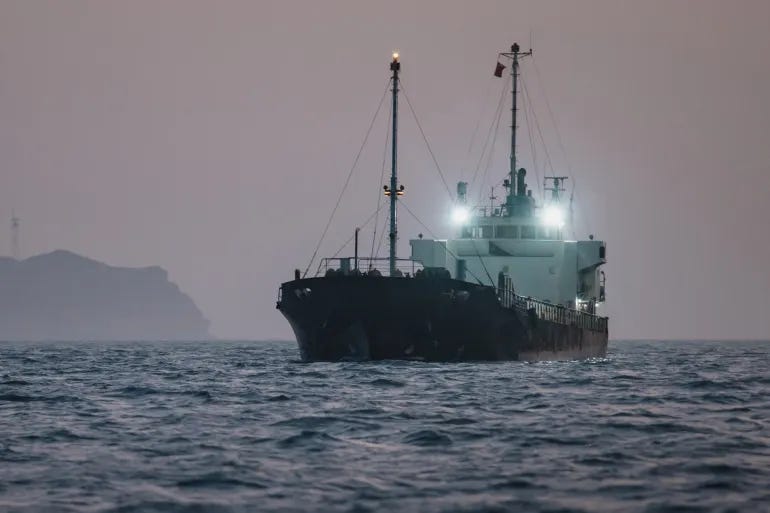
Iran and Oman are nearing the culmination of negotiations over future transit routes through the strategic Strait of Hormuz, according to Tehran.
The discussions, which have been ongoing for the past two months, focus on establishing a safe and agreed-upon passage for commercial shipping amid heightened regional tensions and disruptions caused by conflict.
Agreements on Geographical Coordinates
Iran’s Foreign Ministry announced that the geographical coordinates of the proposed transit routes have now been finalized in cooperation with Oman. Spokesperson Esmaeil Baghaei stated that the two countries are in the final stages of reviewing a joint statement that encapsulates key considerations and agreements. The routes, once ratified, are expected to facilitate smoother maritime traffic, with large parts passing through Iran’s territorial waters and some through Oman’s.
Kazem Gharibabadi, Iran’s deputy foreign minister for legal and international affairs, added that nearly all issues such as entry and exit points have been resolved. The new routes are anticipated to be operational for two to four months or longer, replacing existing temporary pathways. This development signifies an important step toward easing maritime restrictions in the vital waterway.
Strategic Significance and Regional Tensions
The Strait of Hormuz holds immense strategic importance, being a critical corridor for approximately 20% of the world’s oil and liquefied natural gas exports. Since the outbreak of war between Iran and the United States in late February, the waterway has seen a near-total closure, disrupting global energy markets and leading to rising fuel prices.
Iran has enforced this closure, citing US military aggression and threats from Israel, which Tehran claims have undermined the security of the strait. The US has responded with a naval blockade, redirecting dozens of vessels and boarding others, aiming to prevent Iran from asserting control over the waterway. US officials have expressed reluctance to accept any arrangement that would leave Iran in control of the strait, emphasizing the need for secure and free passage for international shipping.
Iran’s Strategic Goals and Regional Implications
Iran perceives its control over the Strait of Hormuz as a major military achievement amid the ongoing conflict. Tehran aims to stabilize this control as a strategic victory, with experts like Ali Akbar Dareini suggesting that negotiations are more about consolidating gains rather than relinquishing control.
Iranian officials assert that the closure is a response to US and Israeli aggression. Baghaei highlighted that despite the progress in negotiations with Oman, the security of the strait remains compromised due to ongoing US military presence and actions. The continued blockade and military maneuvers by the US and its allies keep the region volatile, complicating efforts to restore open shipping routes.
Conclusion
As Iran and Oman approach finalization of transit route agreements, the situation in the Strait of Hormuz remains complex. While diplomatic discussions progress, regional tensions persist, with ongoing military operations and geopolitical rivalries shaping the future of this vital waterway. The outcome of these negotiations could influence not only regional stability but also global energy markets, emphasizing the delicate balance of diplomacy and power in the Middle East.
Houthi Attack on Saudi Oil Tanker in Red Sea Escalates Maritime Tensions
Yemen’s Houthis Claim Targeting of Wafaa Amid Ongoing Blockade
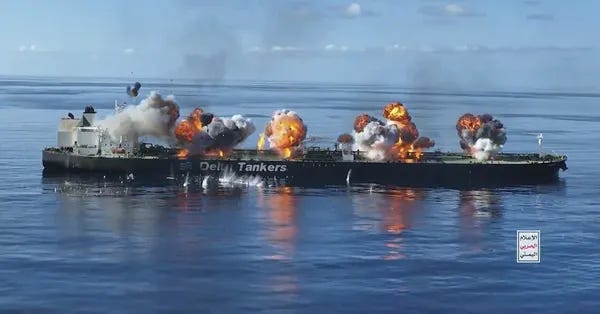
In a recent development amidst ongoing regional tensions, Yemen’s Houthi movement has claimed responsibility for a ballistic missile attack on a Saudi oil tanker in the northern Red Sea.
The incident marks the latest escalation in the group’s maritime confrontations with Saudi Arabia, highlighting the fragile stability of vital shipping routes in the region.
Houthi Claim of Attack on Wafaa
On August 5, 2026, the Houthi military spokesperson Yahya Saree announced that the group had launched several ballistic missiles targeting the Saudi oil tanker Wafaa near Yanbu, along the coast of Saudi Arabia. Saree asserted that the missiles struck the vessel “accurately,” claiming it was part of their broader maritime strategy against Saudi interests. The Wafaa, a commercial tanker, was reportedly hit in the northern Red Sea, a crucial corridor for global oil shipments.
Saree emphasized that this attack is part of the Houthis’ “maritime blockade of Saudi Arabia,” a strategy they have intensified since July 22. The group aims to disrupt Saudi oil exports and maritime navigation through missile strikes and other tactics, asserting that their actions are retaliatory measures against what they describe as Saudi aggression in Yemen.
Escalation of Maritime Attacks and Blockades
The Houthis claim that since the start of their maritime campaign, they have targeted eight Saudi oil tankers. Additionally, Saree stated that they have prevented 29 Saudi vessels from passing through the Red Sea and Arabian Sea, either by forcing them to turn back or by other means. This has significantly impacted Saudi Arabia’s oil exports, which are vital to the global energy market.
According to Saree, the Houthis have successfully redirected some Saudi tankers to the northern Red Sea after imposing their blockade from the Bab al-Mandab Strait, a strategic chokepoint connecting the Red Sea to the Gulf of Aden. This move aims to tighten control over maritime routes and exert economic pressure on Riyadh.
Saudi Response and Regional Implications
As of now, there has been no official comment from Saudi authorities regarding the missile attack or the broader claims made by the Houthis. The incident raises concerns over the safety of commercial shipping lanes in the Red Sea, a critical route for global oil supplies and international trade.
The escalation comes amid ongoing regional conflicts involving Yemen, Iran, and Saudi Arabia, with the Houthis receiving support from Iran. The continued targeting of oil tankers could lead to further destabilization of the region’s maritime security and potentially draw other regional and international actors into the conflict.
Conclusion
The Houthi claim of striking the Saudi oil tanker Wafaa underscores the heightened tensions in the Red Sea and the strategic importance of maritime security in the region. As the conflict persists, global markets and maritime nations remain watchful of further developments, which could have far-reaching implications for international trade and energy supplies.
CIA Creates Secret Cuba Task Force to Increase Pressure
New Initiative Aims to Expand Intelligence and Covert Operations Targeting Cuba’s Leadership

In a significant development, the Central Intelligence Agency (CIA) has reportedly established a clandestine Cuba task force to heighten pressure on the Cuban government and bolster intelligence activities on the island.
According to a report by The New York Times published Wednesday, this move signifies a strategic effort by the United States to influence Cuba’s political landscape amid ongoing tensions.
Enhanced Operations and Resources
Citing sources familiar with the matter, the report details that the new task force will facilitate a rapid deployment of financial, human, and technological resources aimed specifically at Cuba. This initiative aligns with President Donald Trump’s broader agenda to instigate political, economic, and leadership changes within Havana. The task force’s expansion includes the onboarding of case officers, intelligence analysts, cyber specialists, and operatives focused on covert influence operations. This indicates an intensification of U.S. efforts to destabilize Cuba’s current regime and promote a shift in its political structure.
Strategic Goals and Influence Tactics
The primary mandate of the CIA’s Cuba unit is to create divisions within Cuba’s political elite, encouraging the replacement of officials perceived as anti-American. The goal is to foster leadership more receptive to U.S. interests and policies. This approach involves clandestine influence campaigns aimed at weakening the cohesion of the current government, potentially leading to leadership changes that align more closely with U.S. objectives. The move underscores a calculated effort to leverage covert operations, cyber tactics, and political pressure to sway Cuba’s internal politics from afar.
Official Response and Future Outlook
The CIA has declined to comment publicly on the new initiative, maintaining confidentiality around its operations. However, the establishment of this specialized task force highlights a renewed focus on Cuba as a key point of strategic interest for U.S. intelligence and foreign policy. As tensions persist, analysts suggest that Washington’s increased covert activity could lead to heightened instability within Cuba, further complicating the geopolitical landscape in the Caribbean.
This development marks a noteworthy escalation in U.S.-Cuba relations, emphasizing covert influence as a core component of Washington’s strategy to reshape the island’s political environment in favor of American interests.
Regions in Flux: Economics and Geopolitics
Examining the gap between foreign investment and true economic transformation amid regional conflicts
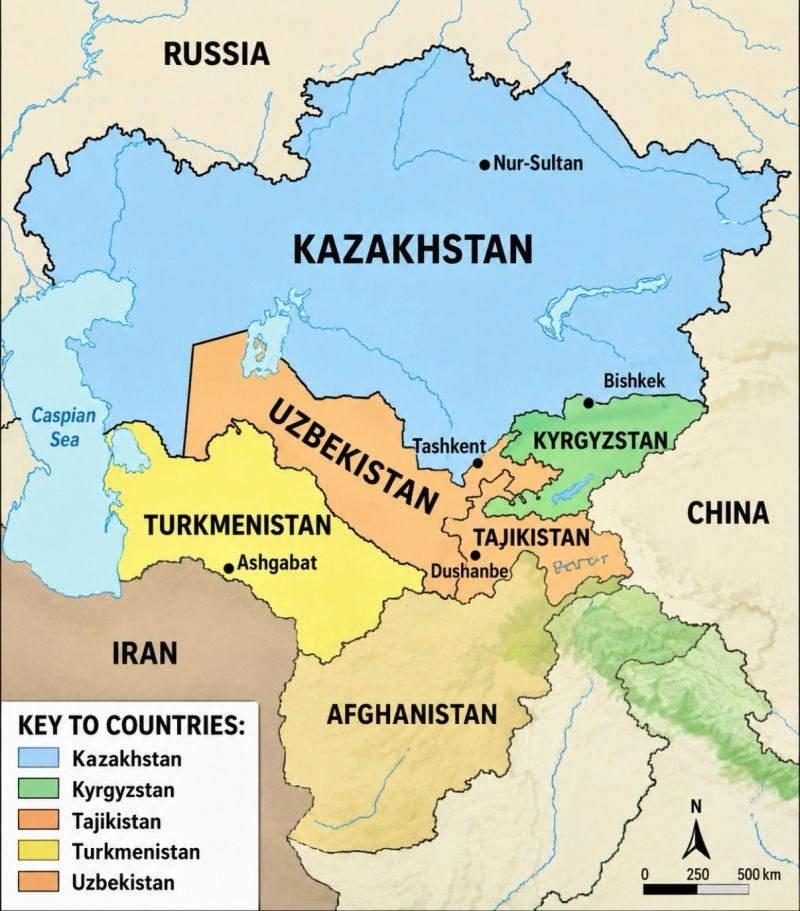
In an era where regional stability and economic growth are intertwined, understanding the nuances behind foreign presence and geopolitical developments is essential.
Central Asia’s rising foreign company registrations highlight increased openness, yet often mask underlying structural barriers. Simultaneously, escalating tensions in the Middle East, particularly around the Strait of Hormuz, threaten global trade routes and diplomatic efforts. Combining insights from economic and geopolitical landscapes reveals the complex challenges and opportunities facing these regions.
Foreign Companies in Central Asia: Presence Without Substance
Central Asian nations such as Kazakhstan, Uzbekistan, Kyrgyzstan, and Tajikistan have seen a significant increase in foreign-owned firms and joint ventures. For example, Kazakhstan hosts over 52,000 foreign entities and nearly 9,000 joint ventures, while Uzbekistan has over 20,000 companies with foreign capital. However, experts warn that these figures often reflect strategic registration rather than meaningful economic activity. Many firms exist solely to hold licenses or participate in public procurement, with little or no operational capacity. Large investors frequently establish multiple subsidiaries for tax advantages, inflating company counts without real investment.
This phenomenon, termed “spatial presence,” contrasts sharply with genuine economic integration. Despite the impressive number of foreign entities, key sectors such as raw material exports in Kazakhstan and small SMEs in Uzbekistan remain limited in their technological and innovative capacities. For policymakers, the challenge is clear: move beyond simplifying registration procedures and address structural barriers like rule of law, logistics, and financial market depth to foster sustainable, long-term investment.
Learning from China’s Strategic Approach
China’s transformation over the past four decades offers a compelling model. Starting as a negligible FDI recipient in 1978, China now accounts for a significant share of global exports, industrial value, and employment. This success hinges on shifting focus from merely attracting quantity to fostering quality supporting industrial upgrading, innovation, and integration into global value chains.
Foreign investment in China now emphasizes high-tech industries, R&D, and design services. Foreign firms are building R&D centers and high-end manufacturing capabilities, not just factories. The Chinese government’s strategy combines openness with conditionality, experimentation with scaling, and short-term incentives with a long-term vision. Central Asian countries could emulate this approach by prioritizing sectoral impact over registration counts, nurturing ecosystems that turn foreign presence into domestic technological and economic transformation.
Geopolitical Tensions in the Middle East: The Strait of Hormuz in Focus
While Central Asia grapples with economic structural reforms, the Middle East faces heightened geopolitical tensions, exemplified by recent developments concerning the Strait of Hormuz. President Trump has indicated that the Strait will reopen “very soon,” signaling a potential easing of one of the world’s most critical maritime chokepoints. The US has communicated its readiness to re-engage with Iran under the Islamabad memorandum, aiming to reopen the strait for navigation.
Iran and Oman have reportedly agreed on a new route through the Strait of Hormuz, which could be operational for at least two months, providing a temporary relief to ongoing tensions. The proposed interim agreement aims to facilitate free passage, but analysts estimate the likelihood of a comprehensive deal remains at around 50%. As negotiations unfold, Pakistan plays a discreet but vital role as a communication channel between the US and Iran, highlighting the complex web of diplomacy in the region.
In parallel, the conflict’s spillover continues with Yemen’s Houthi movement claiming missile strikes on Saudi oil tankers in the Gulf of Aden and the Red Sea. These attacks underscore the fragility of regional stability and the potential for escalation that could threaten global energy supplies and maritime security.
Conclusion
Both Central Asia and the Middle East are undergoing transformative phases shaped by economic ambitions and geopolitical tensions. While Central Asian countries seek meaningful economic integration beyond mere registration figures, they can learn from China’s strategic focus on quality investment and technological development. Meanwhile, the Middle East’s efforts to stabilize the Strait of Hormuz hinge on diplomatic negotiations amid regional conflicts that have far-reaching implications.
China Condemns US Interference in Argentine-Huawei Cooperation
Beijing Criticizes US Actions as Hegemonic and Disrespectful

China has publicly expressed strong opposition to recent actions by the US Embassy in Argentina, which have reportedly obstructed Argentine enterprises from engaging in normal cooperation with Chinese telecommunications giant Huawei.
The Chinese embassy in Argentina criticized these moves as a display of arrogance, prejudice, and a blatant violation of sovereignty, raising concerns over unfair practices that threaten international trade and diplomatic relations.
US Moves Oppose Free Market Principles
According to the Chinese embassy, the US has been actively hyping the so-called “China threat theory” while broadening the definition of national security to justify its interference in foreign business affairs. The embassy pointed out that such practices undermine the core principles of a free market, where private enterprises should operate without unwarranted political interference. The revocation of visas and other restrictions placed on Argentine firms seeking cooperation with Huawei are seen as clear examples of the US trying to impede normal commercial activities under the guise of security concerns.
Hypocrisy of US Democratic Values Claims
Despite touting itself as a champion of democracy and freedom, the Chinese embassy said that the US’s actions reveal a hypocritical stance. The US allegedly cannot tolerate the legal and legitimate operations of a foreign private enterprise which is Huawei within Argentina, which is a sovereign nation. This contradiction exposes the US’s underlying hegemonic ambitions, aiming to dominate global technology markets and restrict China’s influence in international affairs. The embassy urged the US to reflect on its policies and cease political manipulation that harms mutual cooperation.
Call for Respect and Fair Competition
China’s stance emphasizes respect for sovereignty and advocates for fair, open international cooperation. The Chinese government called on the US to correct its perception of China, stop hegemonic acts, and refrain from using political tools to hinder economic relations. The embassy stressed that cooperation between Argentine firms and Huawei should be based on mutual respect and adherence to international trade rules, rather than unilateral restrictions driven by geopolitical motives.
Conclusion
As tensions continue to rise over global technological competition and diplomatic influence, China’s firm stance against US interference underscores the broader geopolitical contest. The Chinese government remains committed to supporting international business cooperation and denounces any actions that threaten to disrupt global markets or undermine sovereignty. Both nations and their partners are urged to prioritize dialogue, respect, and fair practices to ensure peaceful and mutually beneficial development.
The Convergence of Conflicts
Why Washington Cannot Treat Ukraine and Iran as Separate Wars
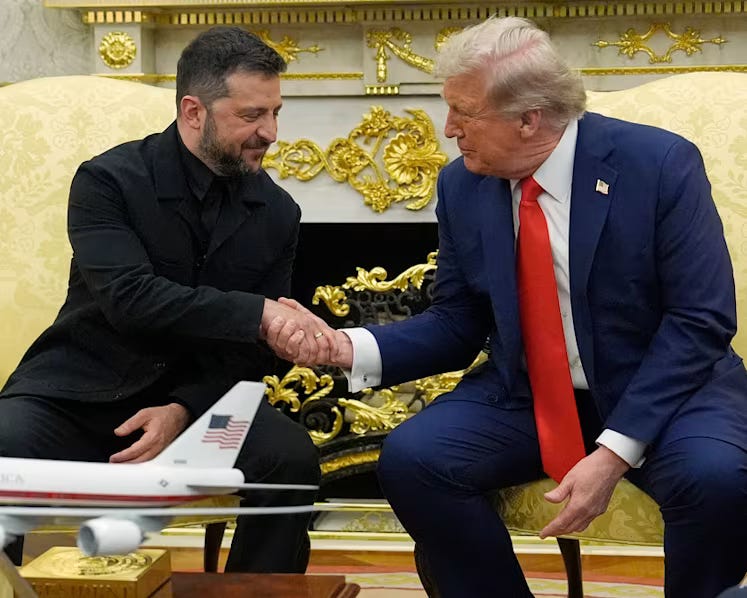
In recent developments, the traditional separation between the Ukraine conflict and Iran’s involvement in regional and global tensions is increasingly dissolving.
Once viewed as distinct geopolitical issues, these wars are now intertwined, with their lines crossing in ways that challenge U.S. strategic calculations. A key driver of this convergence is the evolving relationship between Russia and Iran, which has shifted from reliance to a more complex, and potentially vulnerable, partnership. As Ukraine exploits these vulnerabilities, the U.S. finds itself navigating a web where one conflict directly influences the other.
Russia-Iran Ties: From Reliance to Strategic Vulnerability
Initially, Russia depended heavily on Iran’s drone technology, particularly the Shahed-136, to bolster its military efforts in Ukraine after setbacks in 2022. However, this relationship has gone through a significant transformation. Reports suggest Russia has begun supplying Iran with upgraded Geran drones, based on the original Shahed design, indicating a reversal in the flow of military technology. While drones remain the critical link between Moscow and Tehran, their relationship now faces new vulnerabilities.
Ukraine has capitalized on these weaknesses, sending military experts to the Gulf to assist U.S. and allied efforts in countering Iranian drone attacks. Its recent strikes in the Caspian Sea targeted not only Russian naval assets but also the Iranian supply chain transporting drones and components. These operations threaten Iran’s ability to sustain attacks on U.S. targets in the Gulf and weaken Russia’s logistical networks that support its Ukraine campaign. This dual targeting illustrates how a strike in one war can ripple into the other, transforming Ukraine’s battlefield into a strategic front in the U.S.-Iran conflict.
Ukraine’s Growing Role in the Iran War
Ukraine’s increasing involvement in the Iran conflict marks a significant shift. Its expertise in Russian-Iranian drone technology and its strategic strikes in the Caspian Sea have begun to challenge Iran and Russia’s supply chains and logistics. By disrupting drone shipments and maritime routes, Kyiv is effectively fighting two wars simultaneously, one against Russia in Ukraine and another against Iran’s regional influence.
This development grants Ukraine added leverage with the U.S. and its allies. The Biden administration has shown signs of reconsidering its stance, with indications that support for Ukraine’s military capabilities is increasing. For example, discussions about licensing Ukraine to produce Patriot missile components and expanding security cooperation with Gulf states suggest a broader recognition of Ukraine’s strategic importance as a regional and global actor. Such moves imply that Ukraine is no longer a peripheral player but a key participant in multiple theaters of conflict.
Strategic Reassessments and Evolving Alliances
Washington’s approach to Ukraine is shifting from cautious skepticism highlighted by former President Trump’s dismissive comments to active support that recognizes Ukraine’s potential to influence regional conflicts. The recent meetings between U.S. and Ukrainian leaders, and the signing of security agreements with Gulf nations, reflect this recalibration. Ukraine’s expanded role as a defense collaborator in Europe and the Gulf underscores its rising significance in U.S. strategic planning.
Meanwhile, Russia continues to benefit from rising energy prices driven by disruptions in the Strait of Hormuz, which bolster its revenue and weaken Ukrainian defenses. However, these advantages may not be sustainable long-term, especially as bipartisan support in the U.S. for sanctions against countries trading with Russia and Iran strengthens. The geopolitical landscape is shifting, making it increasingly complex for the U.S. to treat these conflicts as isolated issues.
The Future of Interconnected Conflicts
Despite ongoing military stalemates and unchanging objectives, Ukraine and Russia unwilling to cede territory, Iran and the U.S. unable to reach nuclear or regional agreements, the strategic interconnection between these wars is becoming more pronounced. The longer these conflicts persist, the more their trajectories will influence each other. Washington must recognize that treating Ukraine and Iran as separate problems is no longer feasible; their fates are now intertwined, demanding a comprehensive, coordinated approach to global security.